
Myth vs. Fact: Are Your Invoices Truly LSO Compliant?

When managing a busy legal practice in Ontario, administrative efficiency often feels like a balancing act against stringent regulatory demands. Among the most frequent operational oversights identified during Law Society of Ontario (LSO) practice audits is a deceptively simple mistake: improper invoice formatting.
A widespread misconception persists among practitioners regarding how legal fees and disbursements should be presented to clients. Let’s break down this critical myth, examine the LSO regulations, and look at how modern legal tech mitigates your regulatory risk.
The Myth vs. Fact Breakdown
- THE MYTH: "It’s acceptable to combine professional fees and out-of-pocket disbursements into a single block amount or lump-sum line item, provided the total invoice balance is accurate."
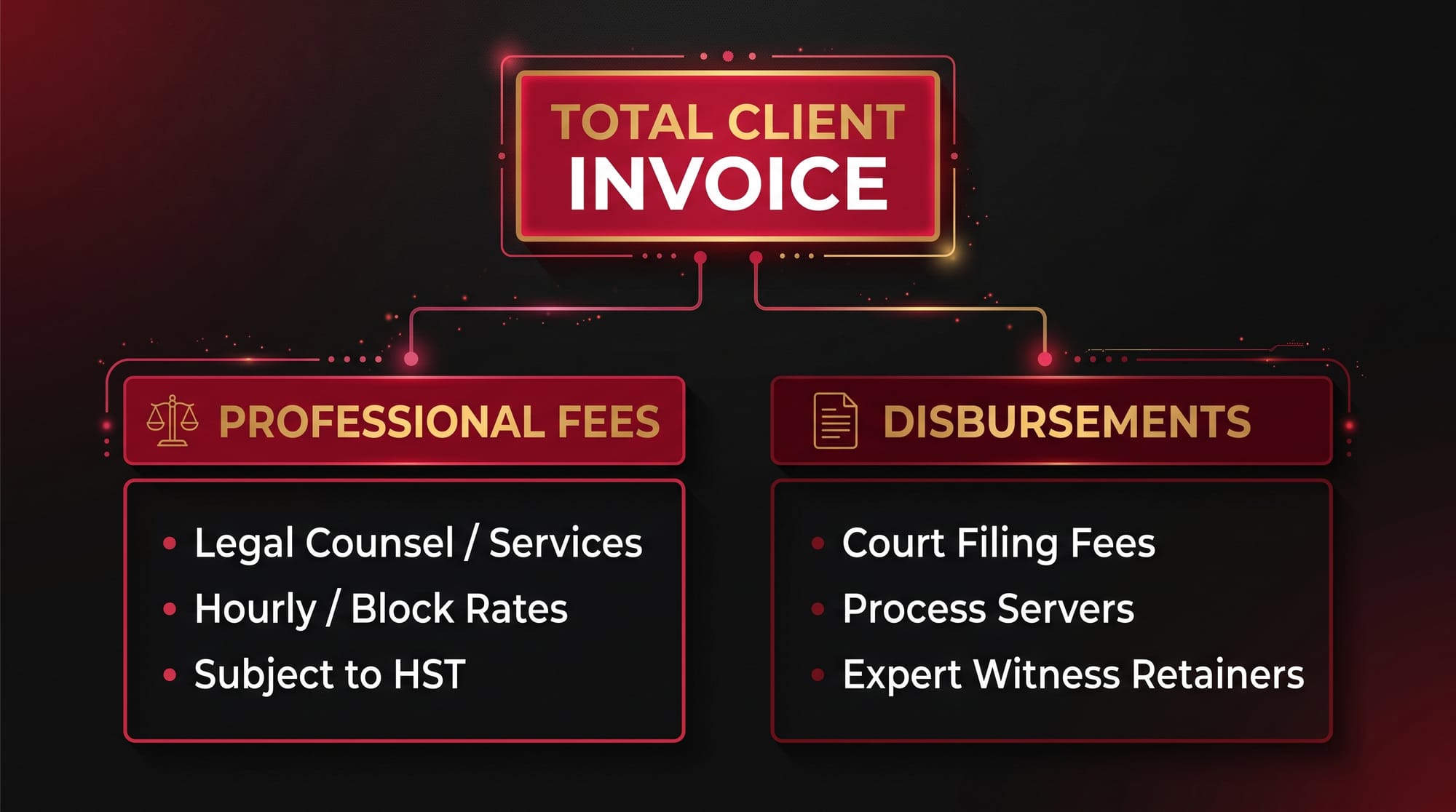
- THE FACT: The Law Society of Ontario mandates that every statement of account—interim or final—must clearly and separately detail professional fees and disbursements. Failing to distinguish between the work you perform and third-party expenses paid on behalf of your client violates LSO rules and risks regulatory scrutiny.
Why the LSO Enforces Strict Separation
Under the LSO’s Rules of Professional Conduct and Paralegal Rules of Conduct (Rule 5.01), transparency in client billing is a core ethical obligation.
- No Profiting on Disbursements: Licensees are strictly prohibited from marking up out-of-pocket expenses. Clients must be charged the exact cost incurred by the firm. Co-mingling fees and disbursements obscures these costs, making audit verification nearly impossible.
- Trust Account Integrity: Transferring funds from a client trust account to a general account requires an itemized statement rendered for completed work. Lumping non-billable costs with legal fees creates accounting discrepancies during spot audits.
- Tax and Assessment Clarity: HST treatment and court assessment of costs require a line-by-line distinction between taxable legal services and pass-through disbursements.
The Operational Solution: Automated LSO Compliance
Manual billing invites human error. Busy practice staff can easily mistake courier charges or filing fees for general legal service items when creating manual summaries.
This is where uLaw changes the equation:
- Automatic Line-Itemization: uLaw automatically separates time-tracked legal fees from loggable out-of-pocket disbursements the moment an invoice is generated.
- Audit-Ready Audit Trails: Every disbursement is paired directly with backing receipts and trust ledger records to ensure compliance with By-Law 9 accounting standards.
- Zero-Margin Error Rate: Pre-configured LSO billing templates mean you never have to worry about improper fee blending again.
Protect your practice from administrative penalties while giving your clients the absolute transparency they deserve.
The information provided in this content is for educational and informational purposes only and does not constitute formal legal, accounting, or professional regulatory advice. Law Society rules, regulations, and accounting guidelines may vary by jurisdiction and practice area. Legal practitioners and firm administrators should consult the official rules of their applicable Law Society or seek professional legal/accounting counsel to ensure compliance for their specific practice.